
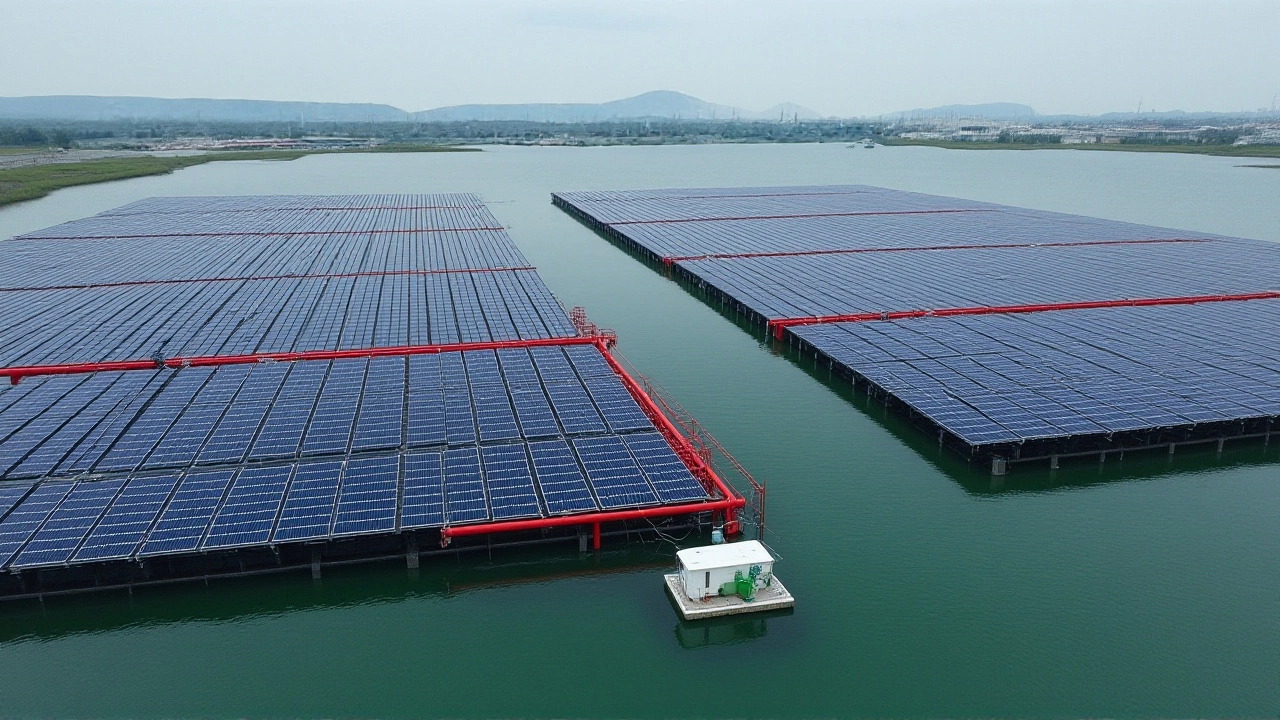
When Maria Rodriguez, Energy Analyst at Global Power Insights, looks at the future of electricity, she doesn't see fields covered in panels. She sees lakes. The twist is that water isn't just a backdrop for these installations; it's an active participant in generating more power, cheaper and cleaner than before.
In Telangana, India, a massive new facility has just gone live, marking a significant shift in how we think about land use. But this isn't happening in isolation. From the gravel pits of Germany to the reservoirs of West Africa, floating solar farms are quietly revolutionizing the energy grid. Here’s why your next power bill might be partly paid by a lake.
The Science Behind the Float
It sounds simple: put solar panels on water. But the engineering is surprisingly complex. Unlike ground-mounted systems, these panels rest on buoyant structures made from high-density polyethylene. These aren't just rafts; they're engineered platforms designed to withstand wind, waves, and the weight of heavy glass-to-glass modules.
Here’s the thing that makes them special: efficiency. Solar panels hate heat. When they get too hot, their voltage drops, and they produce less electricity. Water acts as a natural cooling system. According to technical data from DS New Energy, this cooling effect can boost panel efficiency by 5% to 10%. That’s not a rounding error—that’s free extra power without adding a single new module.
Additionally, covering large bodies of water reduces evaporation. In drought-prone regions, this dual benefit—generating power while conserving water—is a game-changer for resource management.
India’s Largest Floating Plant Goes Live
The latest headline-grabber comes from Singareni Thermal Power Plant in Mancherial district. On Saturday, Novus Green Energy Systems Ltd, a Hyderabad-based firm, announced the successful grid synchronization of what they claim is India’s largest floating solar plant.
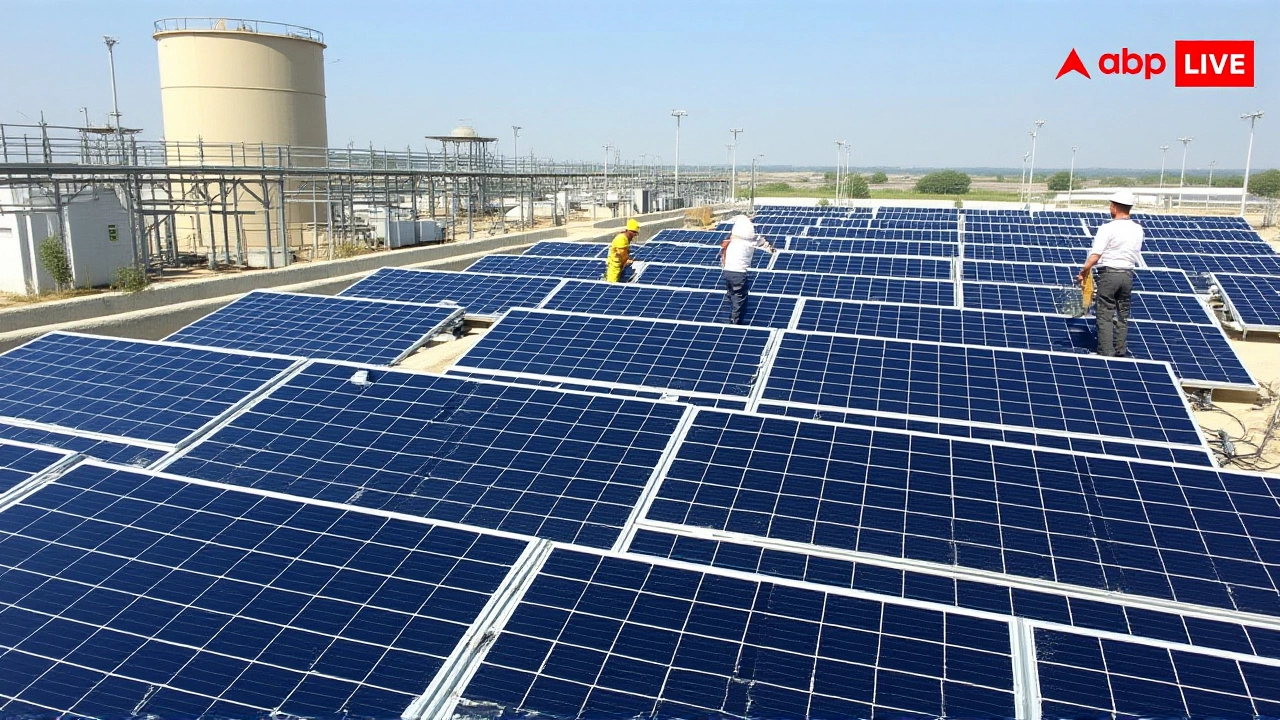
This installation sits right next to a traditional thermal power station. Why? Because the grid infrastructure is already there. Connecting a new plant usually involves digging trenches and laying miles of cable. With floating solar, you’re often placing the generation source directly where the demand exists. It’s like plugging in a lamp instead of building a new house to hold it.
The project uses transparent glass-to-glass modules, which are more durable and resistant to humidity—a critical feature when your office is literally underwater. The platform itself can support loads up to 2.5 times its own weight, ensuring stability even during monsoon seasons.
Global Examples: From Gravel Pits to Reservoirs
India isn’t alone in this experiment. In Bavaria, Germany, engineers have turned old gravel mining lakes into power stations. One such site features 2,600 photovoltaic modules arranged to catch morning and evening light, not just midday sun. This orientation spreads out energy production throughout the day, smoothing out the peaks and troughs that plague traditional solar farms.
This specific German plant generates 2,000 megawatt-hours annually, meeting two-thirds of the nearby quarry’s electricity needs. It’s a perfect example of circular economy thinking: using abandoned industrial sites for green energy.
Meanwhile, in West Africa, the Bui Hydroelectric Dam in Ghana hosts the region’s largest floating solar farm. With a capacity of 5 megawatts, it powers the town of Wenchi, home to 40,000 people. Combined with existing hydro and land-based solar, this hybrid system aims to provide clean energy to hundreds of thousands of homes.
The Numbers Don’t Lie
The growth trajectory is steep. Global floating solar capacity has jumped from 10 megawatts to 77 megawatts in recent years. The International Energy Agency predicts that global renewable energy capacity will double to 4,600 gigawatts by 2030. Floating solar is poised to be a significant slice of that pie.
- Efficiency Boost: 5-10% higher yield due to water cooling.
- Land Savings: Zero agricultural or urban land used.
- Water Conservation: Reduced evaporation from reservoirs.
- Grid Integration: Often located near existing substations.
Challenges Remain
But wait—it’s not all smooth sailing. Literally. Building on water is harder and more expensive than building on land. The materials must be rust-proof, lead-free, and highly resistant to moisture. Maintenance requires boats or drones, adding logistical complexity. And while lakes are calm, oceans are not. Most current projects stick to inland waters for structural safety.
Still, as costs come down and technology matures, these challenges are becoming manageable. The question isn't if floating solar will expand, but how fast.
Frequently Asked Questions
How does floating solar improve efficiency?
Water acts as a natural coolant. Solar panels lose efficiency as temperatures rise. By floating on water, panels stay cooler, resulting in a 5-10% increase in energy output compared to ground-mounted systems exposed to direct air heating.
Is floating solar safe for aquatic life?
Studies suggest minimal impact. The shade provided by panels can actually reduce algal blooms by limiting sunlight penetration, which helps maintain water quality. However, careful site selection is crucial to avoid disrupting sensitive ecosystems.
Why install solar on water instead of land?
Land is scarce and expensive, especially near cities. Floating solar utilizes unused water surfaces like reservoirs, quarries, and ponds, preserving agricultural land and reducing land acquisition costs and conflicts.
What is the lifespan of a floating solar plant?
With proper maintenance, floating solar systems can last 25-30 years, similar to terrestrial installations. The key is using corrosion-resistant materials like high-density polyethylene for floats and specialized waterproof connectors.